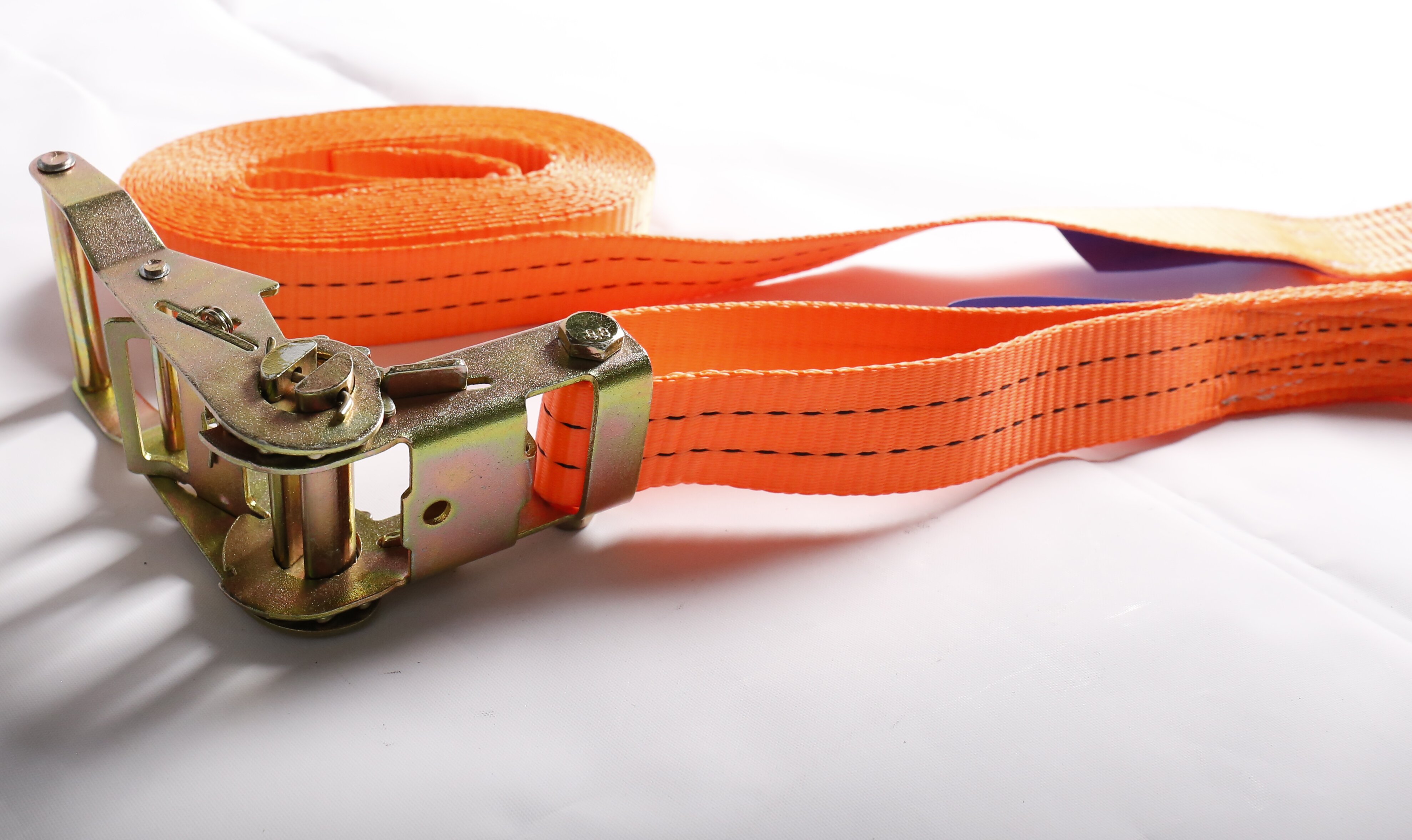
Recently, with the continuous growth of global logistics transportation and industrial manufacturing demands, efficient and safe hoisting and cargo fixation equipment have become the focus of industry attention. As the core link of supply Chain security, the technological innovation and standardized application of products such as Webbing, Tie-Down Straps, Ratchet Straps, Wire Rope Slings, Chain Slings and Lifting Slings It is promoting the dual improvement of industry security and efficiency.
High-performance materials and standardized design
As a fundamental material for lightweight hoisting and fixation, the tensile strength and wear resistance of Webbing's PET or Nylon material directly affect the safety of the load. International standards such as EN 1492-1 and ASME B30.9 impose strict requirements on its fracture strength and labeling specifications.
Tie Down Straps and Ratchet Straps are widely used in road transportation and sea transportation, achieving precise tension control through ratchet mechanisms. The DOT regulations in the United States require that the working load limit (WLL) be clearly marked and regular fatigue tests be conducted to prevent the risk of metal hook breakage.
Heavy-duty hoisting solutions
In the field of heavy industry, Wire Rope Slings have become the first choice for scenarios such as ports and mines due to their high tensile strength and corrosion resistance (such as galvanizing or plastic coating processes). Its structure needs to comply with the ISO 2408 standard, and non-destructive testing (NDT) should be carried out regularly to eliminate the hidden danger of internal broken wires.
Chain Slings are renowned for their alloy steel materials (such as Grade 80/100) and high-temperature resistance, and are suitable for extreme environments such as metallurgy and petrochemicals. Its safety factor should be above 4:1, and each batch should be accompanied by an MTR (Material Test Report) to ensure traceability.
Trends in lightweight and flexible hoisting
Lifting Slings made of synthetic fibers have significant advantages in the handling of precision equipment and flammable environments due to their light weight and non-sparking characteristics. Its classification (such as round slings and flat slings) should match the load type and avoid material degradation caused by UV exposure.
The industry calls for full life cycle management
Experts point out that the selection, use and maintenance of hoisting and fixing equipment need to form a closed loop. Enterprises should introduce digital management systems and combine them with regular visual inspections and third-party certifications (such as CE and OSHA) to reduce human operational risks.
With the advancement of intelligent logistics and Industry 4.0, the sensor integration of the above-mentioned equipment (such as real-time tension monitoring) may become the technological breakthrough point in the next stage.
High-performance materials and standardized design
As a fundamental material for lightweight hoisting and fixation, the tensile strength and wear resistance of Webbing's PET or Nylon material directly affect the safety of the load. International standards such as EN 1492-1 and ASME B30.9 impose strict requirements on its fracture strength and labeling specifications.
Tie Down Straps and Ratchet Straps are widely used in road transportation and sea transportation, achieving precise tension control through ratchet mechanisms. The DOT regulations in the United States require that the working load limit (WLL) be clearly marked and regular fatigue tests be conducted to prevent the risk of metal hook breakage.
Heavy-duty hoisting solutions
In the field of heavy industry, Wire Rope Slings have become the first choice for scenarios such as ports and mines due to their high tensile strength and corrosion resistance (such as galvanizing or plastic coating processes). Its structure needs to comply with the ISO 2408 standard, and non-destructive testing (NDT) should be carried out regularly to eliminate the hidden danger of internal broken wires.
Chain Slings are renowned for their alloy steel materials (such as Grade 80/100) and high-temperature resistance, and are suitable for extreme environments such as metallurgy and petrochemicals. Its safety factor should be above 4:1, and each batch should be accompanied by an MTR (Material Test Report) to ensure traceability.
Trends in lightweight and flexible hoisting
Lifting Slings made of synthetic fibers have significant advantages in the handling of precision equipment and flammable environments due to their light weight and non-sparking characteristics. Its classification (such as round slings and flat slings) should match the load type and avoid material degradation caused by UV exposure.
The industry calls for full life cycle management
Experts point out that the selection, use and maintenance of hoisting and fixing equipment need to form a closed loop. Enterprises should introduce digital management systems and combine them with regular visual inspections and third-party certifications (such as CE and OSHA) to reduce human operational risks.
With the advancement of intelligent logistics and Industry 4.0, the sensor integration of the above-mentioned equipment (such as real-time tension monitoring) may become the technological breakthrough point in the next stage.